
Buying
Property Taxes and Buying Costs in the Valencian Community 2026
Transfer tax, VAT, stamp duty, notary, registry and gestoría costs when buying property in the Valencian Community, with two worked examples for 2026.
31 August 2026 · 6 min · Azur Invest · updated 15/09/2026

Photo: Diego Delso · CC BY-SA 4.0
As of August 2026, buying a resale property in the Valencian Community carries a general transfer tax (ITP) of 9%, rising to 11% on the full taxable base when the property value exceeds 1,000,000 EUR. New builds pay 10% VAT plus 1.4% stamp duty (AJD). Add notary, land registry, and gestoría fees, and the total typically runs 10% to 12% of the price.
How and when each tax is paid
The general filing deadline for ITP and AJD in the Valencian Community is one month from the taxable act or contract. On new builds, VAT is paid to the seller with the purchase payments; it does not follow the model 600 filing deadline. Registration of the deed follows tax filing.
Unlike transfer tax, VAT on a new build isn't filed separately: you pay it directly to the developer as part of the price, alongside the proportional stamp duty, which is settled independently afterwards. That's a practical distinction worth understanding when working out how much you need available on signing day versus thirty days later.
Transfer tax (ITP): the tax on resale properties
Transfer tax (Impuesto de Transmisiones Patrimoniales, ITP) applies to the purchase of a resale home. Since 1 June 2026, the Valencian Community has applied a general rate of 9% of the taxable base, and 11% on the full taxable base when the property value exceeds 1,000,000 EUR.
Reduced rates (8%, 6%, 4%, or 3%) exist for specific groups: young buyers purchasing their first main residence, large or single-parent families, people with disabilities, or victims of gender violence. If you think you might qualify, confirm it with a gestoría before signing, since the requirements vary and aren't applied automatically.
VAT and stamp duty: the taxes on new builds
If you buy directly from the developer, you don't pay transfer tax. Instead, you pay:
- 10% VAT on the purchase price.
- 1.4% stamp duty (AJD), the general rate in the Valencian Community since 1 June 2026, on its taxable base, subject to the applicable property valuation rules.
That adds up to 11.4% in taxes on new builds, compared to 9% or 11% transfer tax on resale properties. This gap is often offset by lower initial renovation costs, but it's worth factoring in when comparing prices.
Notary, land registry and gestoría fees
On top of taxes, every purchase carries these three costs:
- Notary: fees are set by an official scale and depend on the price and the length of the deed. Typically 600 EUR to 1,200 EUR for a mid-range property.
- Land Registry: registering the deed also follows an official scale, usually 400 EUR to 800 EUR.
- Gestoría: for handling taxes, registration, and utility transfers, typically 300 EUR to 600 EUR depending on complexity.
Worked example: a 400,000 EUR purchase
| Item | Resale (9% ITP) | New build (10% VAT + 1.4% AJD) |
|---|---|---|
| Property price | 400,000 EUR | 400,000 EUR |
| Purchase tax | 36,000 EUR (9% ITP) | 40,000 EUR (10% VAT) |
| Stamp duty (AJD) | N/A | 5,600 EUR (1.4%) |
| Notary (estimated) | 800 EUR | 900 EUR |
| Land registry (estimated) | 500 EUR | 550 EUR |
| Gestoría (estimated) | 400 EUR | 450 EUR |
| Total costs and taxes | 37,700 EUR (9.4%) | 47,500 EUR (11.9%) |
The notary, land registry, and gestoría figures are indicative estimates for a property at this price, not fixed fees: the exact amount depends on the length of the deed and the services contracted. For mortgages covered by Law 5/2019, mortgage formalisation costs are paid by the lender and should not be added to the buyer’s purchase costs.

The 3% withholding when the seller isn't a resident
If you buy from a seller who isn't a Spanish tax resident, the law requires you, as the buyer, to withhold 3% of the agreed price and pay it to the Spanish tax authority using form 211, within one month of signing. This isn't an extra tax for you: it's an advance payment toward the tax the non-resident seller must later declare on their capital gain.
If you fail to withhold when required, you can become liable for that payment yourself. Your gestoría should verify the seller's tax residency before signing to confirm whether this applies.
Costs that keep showing up after you buy
The taxes on the purchase are a one off, but some costs recur every year once you own the property. IBI, the annual local property tax, is billed by the town hall based on the cadastral value, not what you paid. If you buy partway through the year, it's common to agree a pro rata split of that year's bill with the seller.
If you're a non-resident for tax purposes and don't rent the property out, you must also file an annual non-resident income tax return (form 210), declaring a deemed income based on the cadastral value even without rental income. If you do rent it out, the filing changes and taxes the actual rental income instead. Neither of these is part of your buying costs, but both are worth budgeting for from year one.
Common budgeting mistakes
- Calculating tax on the listed price rather than the final agreed price. ITP may be based on a value higher than the agreed price, including the cadastral reference value where applicable. VAT has its own taxable-base rules; do not use the advertised price automatically.
- Forgetting stamp duty on new builds. Buyers focus on the 10% VAT and overlook the additional 1.4%, which adds 5,600 EUR on a 400,000 EUR property.
- Failing to separate the 3% non-resident withholding. Deduct it from the amount paid to the seller and remit it to the tax authority; it is not an extra 3% on top of the agreed price.
- Confusing municipal capital gains tax with transfer tax. The seller is generally the taxpayer for municipal capital gains tax. When the seller is a non-resident individual, the buyer acts as substitute taxpayer; agree how it will be settled and check whether a taxable increase exists.
This is not tax advice
The transfer tax and stamp duty rates quoted here reflect Valencian Community rules in force since 1 June 2026, and the notary, registry, and gestoría figures are estimates to guide you, not fixed quotes. Every transaction has particulars (reduced rates, an associated mortgage, buyer profile) that change the final calculation.
Always confirm your specific case with a lawyer or tax advisor before signing. If you'd like a realistic cost estimate for a property in Altea, get in touch with our team and we'll connect you with the advisors we work with regularly.
These figures apply specifically to the Valencian Community, which includes Alicante province and Altea. Other Spanish regions set their own transfer tax and stamp duty rates, so don't assume the same numbers apply if you're comparing Altea against a property elsewhere in Spain.
Read the full process in our guide to buying a house in Altea as a foreigner, learn how financing works in our guide to mortgages for non-residents, or browse properties for sale in Altea to run your own numbers.
Source: Law 13/1997, article 13 (BOE). The ITP taxable base can exceed the agreed price; check the cadastral reference value and applicable valuation rules before calculating tax.
Source: Valencian Tax Agency: AJD and model 600 deadline.
Additional source: Ley de Haciendas Locales, artículo 106.
From our portfolio
A property for sale in Altea right now
See the whole Altea portfolio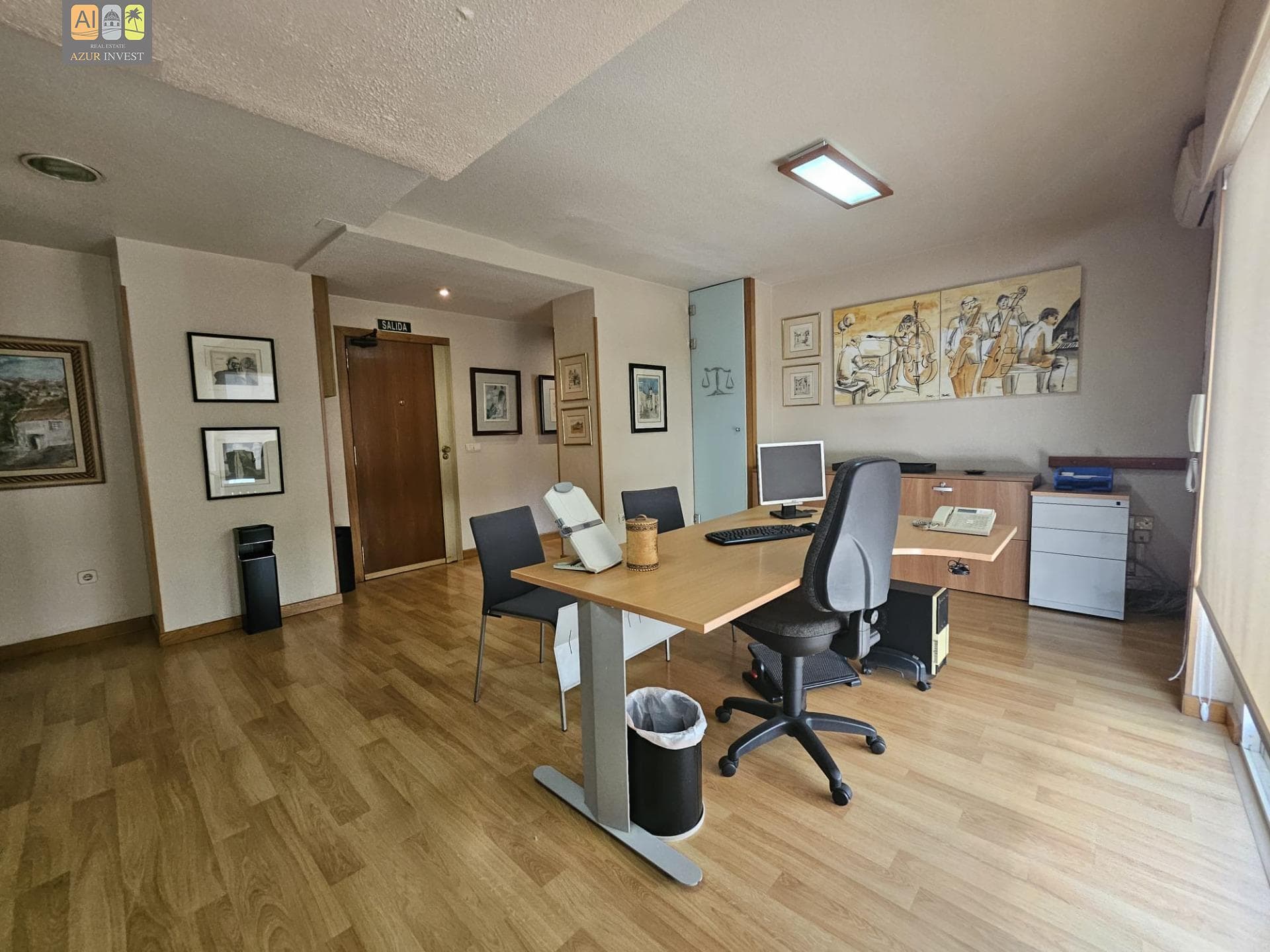
Frequently asked questions
- How much is the transfer tax on a resale property in the Valencian Community?
- As of August 2026, the general rate is 9% of the taxable base, rising to 11% on the full taxable base when the property value exceeds 1,000,000 EUR. Reduced rates exist for specific cases such as young buyers or large families.
- What tax does a new build pay instead of transfer tax?
- New build properties don't pay transfer tax. They pay 10% VAT on the price plus stamp duty (AJD), set at 1.4% as of August 2026 in the Valencian Community.
- How much do total buying costs add up to?
- Between 10% and 12% of the purchase price, combining taxes, notary, land registry, and gestoría fees. The exact figure depends on whether it's a resale or new build, and on the final price.
- Is there a special withholding if the seller isn't a Spanish tax resident?
- Yes. The buyer must withhold 3% of the price and pay it to the Spanish tax authority via form 211, as an advance on the tax the non-resident seller must later declare.