
Renting
Holiday Rental License in the Valencian Community
What Valencian law requires before you let your home to tourists: the Tourism Registry, municipal report, Altea's zoning rules and fines, at November 2026.
· · 11 min read · Bruno Barbara, Azur Invest

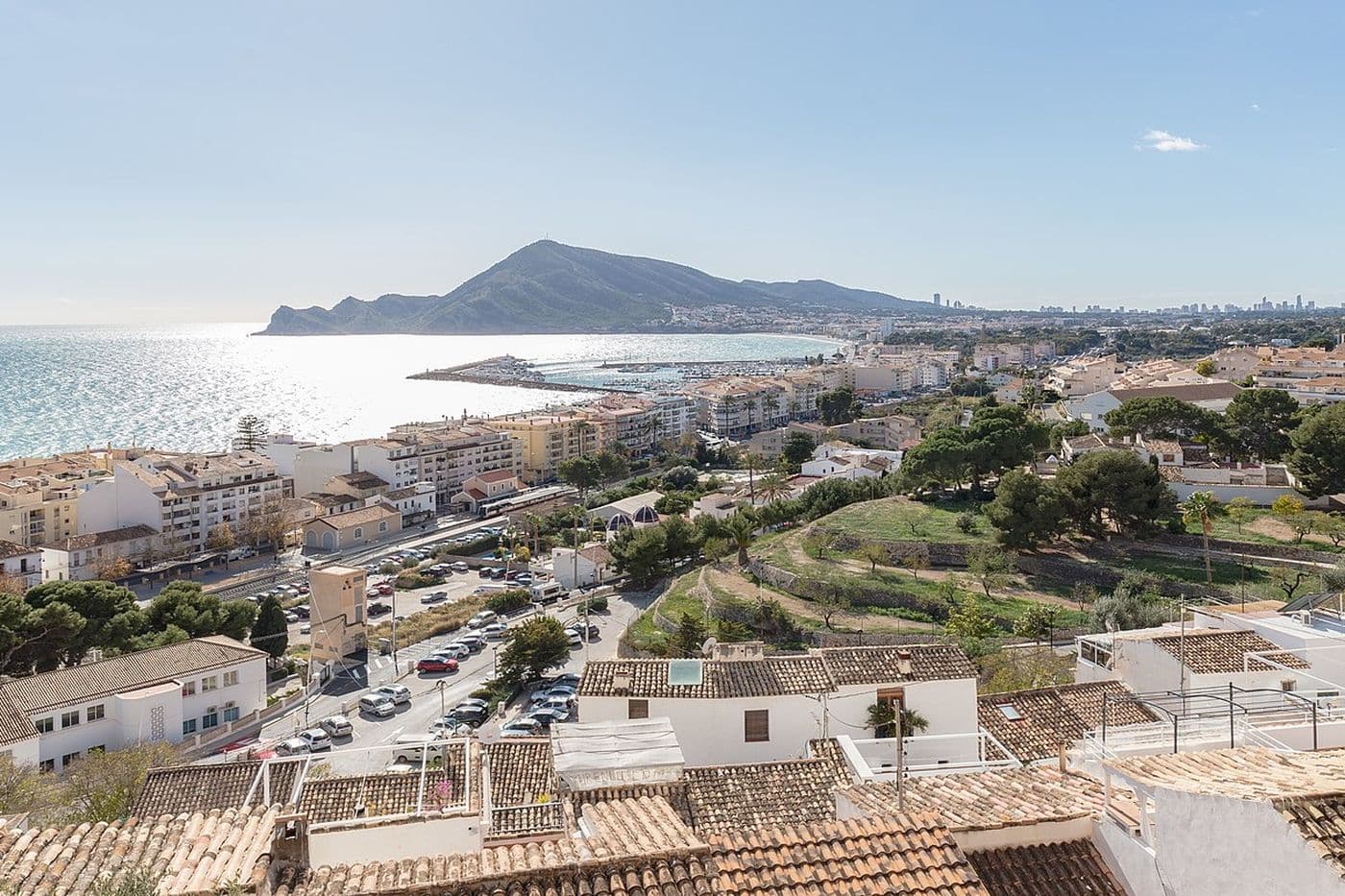
Photo: kallerna · CC BY-SA 4.0
There is no "license" for holiday rentals in the Valencian Community, not in the strict sense. What the law requires is a responsible declaration and registration in the Generalitat's Tourism Registry, backed by a municipal report issued first. Skip those steps and renting your Altea property to tourists is illegal, with fines that can reach six figures. Here is what the rules actually require, as of 6 November 2026, and in what order to handle them.
Notice, 6 November 2026: Spain's rental and tourist letting rules are being changed by decree laws (Royal Decree Laws 28/2026 and 29/2026) that are still awaiting validation by Parliament. This article states what applies on that date. Confirm the current rule before you buy or let, starting with the Official State Gazette entry for Royal Decree Law 29/2026.
What the "license" for a holiday home really means here
The word "license" confuses people because other Spanish regions do require prior municipal authorization. The Valencian Community works differently: you file a responsible declaration with the Generalitat stating that you meet the requirements, and the administration checks it afterward.
That does not make the process light. You need several documents in order before you file, and if one is missing, the registration can be cancelled after a review.
Where Altea admits new tourist dwellings since July 2026
Altea regulates where new tourist dwellings can open on urban land. Its Complementary Ordinance 4-8 was provisionally approved by the town council on 4 June 2026, became final on 29 June 2026 after a favourable report from the Coastal Authority, and was published in the Official Bulletin of the Province of Alicante no. 121 of 1 July 2026. It classifies each zone by a vulnerability indicator and sets a municipal maximum of 12 tourist dwellings per 100 homes.
- Vulnerable zones, no new tourist dwellings: the historic core of Altea, Clot de Mingot, Piteres, Carrer la Mar, Ensanche Avenida and the Fachada Marítima (seafront). The only exception is the full rehabilitation of a building of traditional architecture located in the historic cores, or of a listed building.
- High risk zones (Llanos del Castillo, the extension of the historic core, the core of l'Olla and Cap Negret): new tourist dwellings only while they do not exceed 4 % of the homes in the subzone.
- Medium risk zones (Rotes San Chuchim polygon D1, Mascarat Norte, Garganes, Cap Negret, Pla de Albes): the cap is 8 %.
- Everywhere else, including the developments in the sierra and Altea la Vella: there is no zone cap.
The ordinance adds three limits. Only a home with an occupation title can become a tourist dwelling. A building that occupies the coastal protection easement cannot change to tourist use, save the exceptional case of the Coastal Law, and uses in that strip need regional authorization. Nor can a home in the industrial tolerance zone.
The town hall can review the vulnerability of each zone at any time and at least every five years, and the pressure index every year. For a specific property, the municipal map is what counts. Source: Altea town hall, final approval of the tourist dwelling regulation.
What you need in hand before you list the property
The responsible declaration has to state, among other points, that you have:
- A favourable municipal urban planning compatibility report (ICU), issued by Altea's town hall, confirming tourist use is allowed on that plot and in that specific home.
- A valid occupation title: a first or second occupation licence, or the equivalent responsible declaration.
- Civil liability insurance covering the holiday rental activity.
- Certification that the community's bylaws or agreements do not prevent the use, if the home is in a building with an owners' association.
The declaration also includes the individual cadastral reference and the period of the year you will market the property. An energy performance certificate is required whenever you let a home to a new tenant.
Nothing moves forward without the urban planning report. It is the document everything else depends on, so ask about it before you buy.
How to register the property, step by step
Registration happens online, with a digital signature, through the Generalitat's electronic office. You will need to provide:
- The property's cadastral reference.
- Identification of the owner, or of whoever manages the rental with express authorization.
- The marketing period: the months of the year you intend to offer the property as tourist accommodation. Outside that declared window, you cannot advertise it as such.
- The urban planning report, with its secure verification code.
- Proof you can offer the property: the deed, a rental contract with the owner's express authorization, or a management mandate.
The law treats anyone who lets at least five tourist dwellings as a management company.
What the property itself needs, not just the paperwork
Registration is not only a document check. The property has to be adequately furnished and equipped for a guest to move in immediately, in a proper state of hygiene and cleanliness at every changeover.
Two practical details that owners often miss:
- The number of guests you declare in the registration has to match the actual beds in the property. Advertising more capacity than declared, or hosting more guests than declared, creates a problem at any inspection.
- Every advertisement of the property has to include its registration number and its exact location.
The VT number: why it has to appear on every listing
Once your registration is approved, you get a number in the format VT and the digits and provincial suffix assigned by the registry. In Altea, that number ends in the letter A, for Alicante.
That number has to appear on every listing of the property, on any platform: Airbnb, Booking, your own website or a physical sign. Failing to publish the registration number and the location is a serious infraction, whether or not the underlying registration exists.
Owners' association approval, required since April 2025
If your property sits in a building under horizontal property law, you have needed express approval from the owners' association to use it for holiday rental since 3 April 2025, passed by three fifths of the owners representing three fifths of the ownership shares. By the same majority the community can limit, condition or ban the activity, or set a surcharge of up to 20 % on the community charges. These agreements are not retroactive.
Owners who were already operating before 3 April 2025, registered under the tourism rules, can continue under the conditions of those rules. The protection does not cover anyone who was letting without registration. Whether it survives a change of owner or the five year renewal has not been settled, so ask a lawyer if you are buying a home that relies on it.
Check your community's bylaws and recent minutes before doing anything else. Community rules are a frequent obstacle in buildings with several year round residents.
Reporting guests, separate from the tourist registry
The regional registration does not replace a separate national obligation: anyone providing accommodation must record and report guests' details to the Ministry of the Interior, under Royal Decree 933/2021, currently through the SES Hospedajes system. This is a different obligation from the tourism registration, and it applies whether or not you use a booking platform.
How long the registration lasts, and how it is renewed
Since Decree Law 9/2024, registration in the Tourism Registry is valid for five years. To renew it, you file a new declaration with an updated favourable municipal report within the month before it expires; otherwise the dwelling is removed from the registry. Dwellings registered between July 2018 and August 2024 keep their registration until August 2029.
The Generalitat can review files and request the relevant supporting documents. If you receive a request, follow the deadline and instructions in that notice. Failure to remedy missing information may lead to removal after the applicable procedure.
The national NRUA registry is no longer required, the regional one still is
Until May 2026, there was also a national Single Short Term Rental Registry number (NRUA), which platforms required to publish listings. Spain's Supreme Court annulled the single registry procedure and the national number in three rulings of 19 May, 21 May and 1 June 2026, published in the Official State Gazette.
Since then, you do not need to request an NRUA number to list your property on any platform. Platforms are still bound by EU Regulation 2024/1028, applicable since 20 May 2026, to require and display the registration number where a registration procedure exists. In the Valencian Community that is the Tourism Registry number, and it does not replace other municipal, sectoral or guest reporting requirements.
What happens if you rent without complying
The fine amounts have been in article 94 of Law 15/2018 since 2018. Decree Law 9/2024 added new infractions, such as failing to report a change of owner (serious) or letting by rooms (very serious).
| Severity | Statutory fine |
|---|---|
| Minor | Up to 10,000 euros, or a warning |
| Serious | 10,001 to 100,000 euros, and possible closure for up to six months |
| Very serious | 100,001 to 600,000 euros, and possible cessation |
These are the amounts in force on 6 November 2026. The power to sanction belongs to the Generalitat, which can delegate it to town halls that request it and meet the legal requirements. The owner is also liable, in the alternative, for an illegal offer if they do not identify who runs the activity when asked.
Inspections do not follow a published calendar, and they can start from a complaint or from a routine check. There is no fixed schedule you can plan around, which is one more reason to keep the paperwork current rather than treat it as a one time task.
How much this costs, in time and effort
There is no single cost figure, since it depends on the size of the property, whether you need work done to get a valid occupation title, and whether you hire someone to handle the paperwork or do it yourself. What you can plan for is the order: the zone rule and the urban planning report come first, so if you want to start renting in summer, start the process well before.
A buyer who leaves these checks until after completion can reach the high season still unable to list the property. Starting early protects the first season.
Where to check the current status of a file
Altea's town hall issues the urban planning report and applies Ordinance 4-8. The Generalitat's tourism department (Turisme Comunitat Valenciana) runs the online Tourism Registry itself, including the responsible declaration and the VT number, and holds the power to sanction. Confirming directly with these two bodies, rather than relying only on what a seller or a platform tells you, is the only reliable way to know where a specific property really stands.
The steps, in order
- Check with Altea's planning department whether the zone admits new tourist dwellings under Ordinance 4-8.
- Confirm the property has a valid occupation title: a first or second occupation licence, or the equivalent responsible declaration.
- Request the municipal urban planning compatibility report from Altea's town hall.
- If you live in a building with an owners' association, get the three fifths vote.
- Take out civil liability insurance and order the energy certificate.
- File the online responsible declaration with the Generalitat and wait for your VT number.
- Set up guest reporting to the Ministry of the Interior before your first booking arrives.
This is general guidance, not legal advice: every file depends on the specific plot and building, so confirm your case with Altea's town hall or a lawyer before buying a property you plan to rent out.
If you are looking for a property in Altea in a zone that admits holiday letting, or want us to check the tourist rental potential of a specific home before you buy it, Azur Invest works with this kind of rental and can help you ask the right questions of the town hall. See our guide to real holiday rental returns in Altea before you run the numbers, and if you are after a long term tenant instead of tourists, read how long term rentals work in Altea. You can browse holiday rental properties available in Altea right now, or get in touch so we can look at your specific case.
Length of stay and change of owner
In the Valencian Community a tourist dwelling is let for stays of up to ten consecutive days to the same guest, and a stay of 11 days or more is not a tourist letting. Temporary residential rental requires, as of November 2026, more than 31 days and a written cause in the contract. The rules for stays between 11 and 31 days are not settled, so ask a lawyer before offering them.
The buyer does not inherit the seller's registration: a new owner must file a new responsible declaration with a new favourable municipal report. Before signing, ask Altea's planning department whether the zone admits new tourist dwellings. Whether a tourist dwelling in a vulnerable zone can keep that use after a sale depends on how the planning department applies that rule, so confirm it with them in writing.
Source: Generalitat Valenciana: tourist dwelling registration and changes.
Additional sources: BOE: Royal Decree 1312/2024, partial annulment of the national registry, Horizontal Property Law and EU Regulation 2024/1028.
Classification and other measures depend on the conduct and proceedings. Source: Law 15/2018, article 94.
From our portfolio
A holiday let available in Altea right now
See the whole Altea portfolio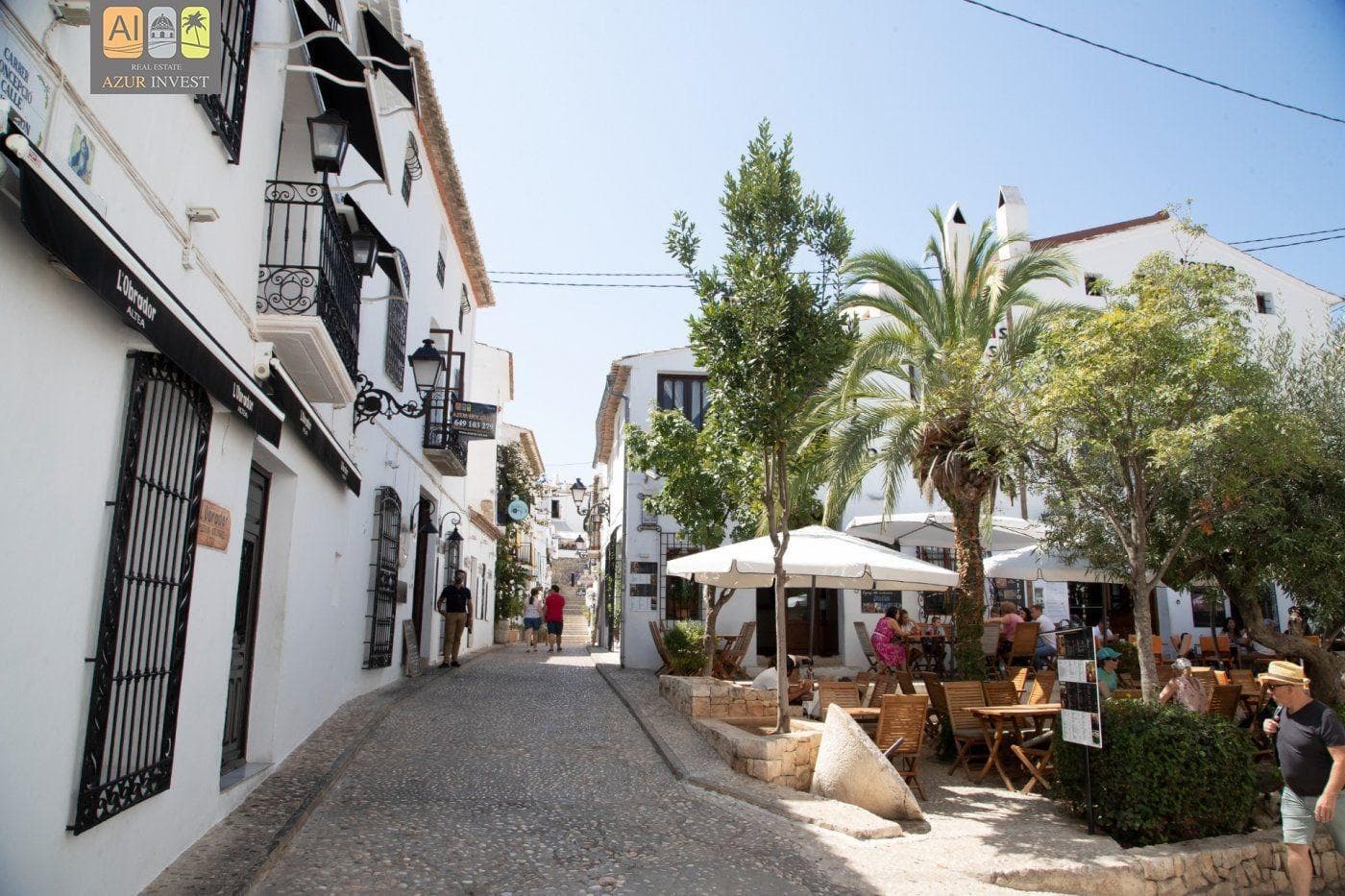
Frequently asked questions
- Do I need a license to rent my property to tourists in Altea?
- There is no license in the strict sense in the Valencian Community. You file a responsible declaration and register the property in the Tourism Registry, backed by a favourable municipal urban planning report. Since July 2026 Altea's Ordinance 4-8 also decides whether your zone admits new tourist dwellings at all.
- How long does the urban planning report take in Altea?
- There is no fixed legal deadline, and it depends on the town hall's workload at the time. Ask Altea's planning department before you buy, because the report is the step everything else depends on.
- Do I still need the NRUA to list on Airbnb or Booking?
- No. Spain's Supreme Court annulled the national registry procedure and the NRUA number in three rulings of 19 May, 21 May and 1 June 2026. Platforms must still ask for and display the registration number where one exists; in the Valencian Community that is the Tourism Registry number.
- Can my owners' association block holiday rentals?
- Yes. Since 3 April 2025 you need the express approval of the community, by three fifths of the owners representing three fifths of the shares, and the same majority can limit, condition or ban the activity. Owners who were already operating before 3 April 2025, registered under the tourism rules, can continue.
- What happens if I rent without registering?
- Under article 94 of Law 15/2018, minor infractions carry a warning or a fine of up to 10,000 €, serious ones 10,001 to 100,000 € and very serious ones 100,001 to 600,000 €. The Generalitat holds the power to sanction; the law allows it to delegate that power to town halls that request it.