
Selling
Energy Performance Certificate Spain: Cost and Rules
The energy performance certificate in Spain: who issues it, what it costs, how long it lasts, and the fines for selling a home without one in 2026.
· 6 min read · Bruno Barbara, Azur Invest
Photo: Superchilum · CC BY-SA 4.0
The energy performance certificate in Spain is required when you sell a home, with the legal exceptions, and every listing must show its rating. Without it you cannot advertise the home legally, however good or poor the rating turns out to be.
British sellers will know the idea from the UK EPC. The Spanish certificate uses the same A to G scale, with its own rules on registration, validity and fines, set out below.
What is the energy performance certificate, and what does it measure?
The energy performance certificate (certificado de eficiencia energética) rates a home's energy use and CO2 emissions under normal use, on a scale from A, the most efficient, to G, the least efficient. It takes into account insulation, windows, orientation, the heating and cooling system and, where there is one, the hot water system.
It does not measure the general condition of the home, and it does not replace a building inspection. The two documents serve different purposes: the energy certificate covers consumption, while the Valencian building report (IEEV.CV) covers conservation, accessibility and energy efficiency of the whole building.
Who issues the certificate, and how does it work?
A competent technician issues the energy certificate, typically an architect, a building engineer (arquitecto técnico) or an engineer with the relevant competence. The process has three steps:
- Visit to the home. The technician measures areas and checks windows, insulation, orientation and the heating, cooling and hot water systems. A visit to a standard flat lasts 30 to 60 minutes.
- Rating calculation. With that data, official software approved by the Ministry estimates consumption and assigns the letter from A to G.
- Official registration. The technician registers the certificate with the competent regional body, which in the Valencian Community depends on the Generalitat. When you sell, the contract carries a copy of the registered certificate and its label.
Once registered, the certificate includes an energy label. The rating must appear in any sale or rental listing, on a property portal or on a sign on the facade, under Real Decreto 390/2021, article 17 (BOE).
How much does an energy performance certificate cost in Spain?
The price is not regulated, so each technician sets a fee; the usual indicative ranges at August 2026 run from 50 EUR for a small flat to 400 EUR for a house or villa. These are market estimates, not official prices.
| Type of home | Indicative range (EUR) |
|---|---|
| Flat up to 100 m² | 50 to 135 |
| Flat over 100 m² | 90 to 200 |
| House or villa | 100 to 400 |
The final price depends on the built area, the region and whether the technician includes the registration fees in the quote. Always ask for a fixed quote before you commission it.
How long is the energy certificate valid?
The energy certificate is valid for a maximum of 10 years, or 5 years if the rating is G, under Real Decreto 390/2021, article 13 (BOE). When it expires you need a new one to keep advertising the home, for sale or for rent.
Real Decreto 390/2021 replaced the earlier 2013 rules. The procedure was amended by Real Decreto 659/2025 with effect from 23 July 2026, so check with your technician that the certificate follows the current procedure.
What are the fines for selling without an energy certificate?
Fines run from 300 to 6,000 EUR in three bands: minor infringements 300 to 600 EUR, serious 601 to 1,000 EUR and very serious 1,001 to 6,000 EUR, under Real Decreto 390/2021, article 21, and the Ley de Suelo y Rehabilitación Urbana (BOE).
| Infringement | Band | Fine (EUR) |
|---|---|---|
| Advertising without stating the rating | Minor | 300 to 600 |
| Selling or letting without handing over a valid, registered certificate | Serious | 601 to 1,000 |
| Falsifying data, or advertising a rating without a registered certificate | Very serious | 1,001 to 6,000 |
On top of the administrative fine, the large property portals ask for the certificate before they activate a listing, so in practice the home does not get published normally without it.
Does a poor rating stop you from selling, or lower the price?
A rating of E, F or G does not block the sale, but buyers often use it to negotiate a discount if they expect to spend on insulation, windows or heating soon. That applies especially to old town homes built before any energy efficiency rules.
Improving the rating before selling rarely pays back the cost of the works against the final price. The usual approach is to certify the home as it stands and let the asking price reflect the rating, which we factor into the first valuation. There are exceptions: replacing old windows with double glazing can raise the rating by a full letter at moderate cost, and then it can be worth doing before you list.
Is the certificate also required when you let?
Yes: the energy certificate is required when a home is let to a new tenant, and a copy of the label goes to the tenant. The old exclusion for homes used less than four months a year no longer exists, under Real Decreto 390/2021, article 3 (BOE). The wider rules on letting a home in Spain are changing in 2026 through Real Decreto-ley 29/2026 (BOE), pending validation as of November 2026, so check the current position with an adviser before you let.
How does the energy certificate differ from the IEEV.CV?
The energy certificate rates one home's energy use, while the IEEV.CV is the Valencian inspection of the whole building's conservation, accessibility and energy efficiency. In the Valencian Community, owners of any residential building more than 50 years old, including detached homes since 1 January 2024, must commission the IEEV.CV at least every 10 years, under the Valencian planning law, article 189 (BOE).
You may need both documents at once if your home is in an old building in Altea old town. We go through these and the other papers in the documents needed to sell a house in Spain.
Why do international buyers look harder at the rating?
Many of our buyers come from Belgium, the Netherlands, France, Britain and the Nordic countries, markets where energy labels have been in place for longer and are checked as a matter of routine before an offer. In an old town house with thick stone walls, the rating can surprise a buyer who expects a high letter because the house "feels cool" in summer. The official calculation penalises the lack of certified insulation in windows and installations.
Explain the rating before the viewing, together with the reasonable improvements available and their approximate cost. That keeps the energy conversation from derailing a negotiation that is going well on everything else.
What does the technician need before the visit?
Have the cadastral reference, the built area from the deed and, if you have them, the details and age of the boiler or heating system ready. With this, most technicians issue the certificate within 3 to 7 working days of the visit.
Order the certificate as soon as you decide to sell, because without it you cannot publish the listing once the price is set. See the full process in selling a house in Altea step by step. To find out which asking price makes sense before you commission anything, ask for your free valuation or contact us. This is general guidance, not legal advice: confirm the requirements for your home with a competent technician.
From our portfolio
A property for sale in Altea right now
See the whole Altea portfolio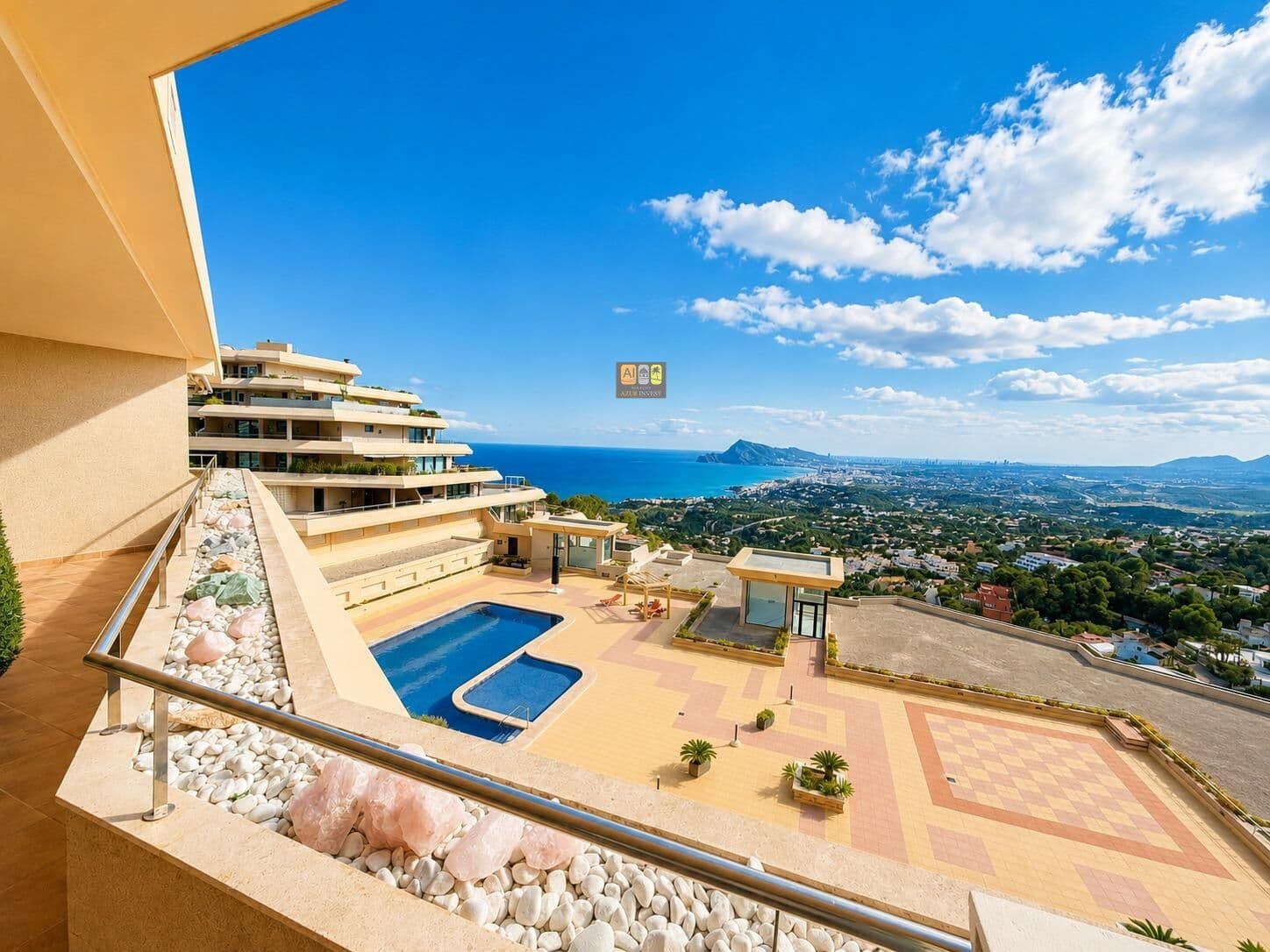
Frequently asked questions
- Is an energy performance certificate required to sell a home in Spain?
- Yes. Under Real Decreto 390/2021 the certificate is required when a home is sold or let to a new tenant, a copy of the registered certificate and its label is attached to the sale contract, and every listing must show the rating. A competent technician issues it, not the town hall, and it is a different document from the nota simple or the deed.
- How much does an energy performance certificate cost in Spain?
- Prices are not regulated, so each technician sets a fee. As indicative ranges at August 2026, expect 50 to 200 EUR for a flat and 100 to 400 EUR for a house or villa, depending on floor area and region. Ask for a fixed quote, and check whether the registration fee is included.
- How long is an energy performance certificate valid in Spain?
- A maximum of 10 years, or 5 years if the rating is G, under article 13 of Real Decreto 390/2021. Once it expires you need a new one to keep advertising the home for sale or rent. The procedure was amended by Real Decreto 659/2025 with effect from 23 July 2026.
- What happens if I sell without an energy certificate?
- Selling or letting without handing over a valid, registered certificate is a serious infringement, fined from 601 to 1,000 EUR. Advertising without stating the rating is a minor infringement (300 to 600 EUR), and falsifying data or advertising a rating without a registered certificate is very serious (1,001 to 6,000 EUR).
- Does a poor energy rating stop me from selling?
- No. A home rated E, F or G can be sold in the same way, but buyers often use the letter to negotiate, especially if they expect to spend on heating, cooling or insulation soon. Many sellers get the certificate as the home stands and let the asking price reflect the rating.